
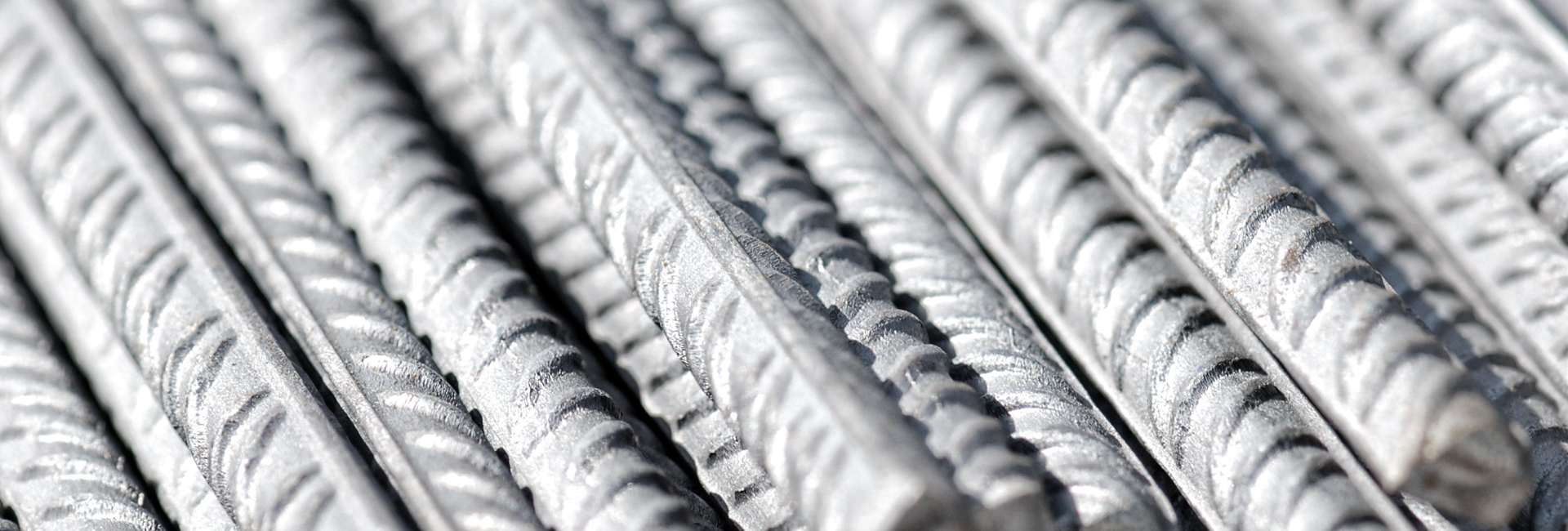
It is really easy to state that the history of TMT bars is the ultimate story of development. Right from the first-time steel was invented in the 13thcentury BC to the high-tech applications in modern times, steel is known to have powered various major economic, social, and cultural changes. It formed the backbone of the economy of the present world.
|
Table of Content
|
The journey of TMT bars reflects how steel technology has evolved to meet modern construction needs. From traditional steel rods to advanced thermo-mechanically treated bars, TMT bars have transformed structural strength and safety. Understanding the history and evolution of TMT bars helps builders choose durable, high-performance steel that supports stronger, safer, and long-lasting structures in today’s construction industry.
How TMT Bars Transformed Construction
Steel is the perfect match for Reinforced Cement Concrete or RCC, which was later invented in 1867. None of the other materials have such flexibility, reliability, and strength as RCC, which is the most commonly used construction material over here.
Concrete is likely to be very strong when compared to RCC, but also rather weak when it comes to tension. Steel, on the other hand, is very strong in tension and presents tensile strength to concrete.
The thermal expansion of both concrete and steel will be nearly the same. Steel bonds well with concrete and is known for its extreme bend-ability. So, that makes it the perfect material for reinforcing concrete structures.
Reinforced Cement Concrete (RCC) is one of the most widely used construction materials, and one of the most perfect combinations is steel and concrete. Concrete is extremely strong in compression and weak in tension. Therefore, steel, which is strong in tension, is the perfect construction material that skyrocketed the construction industry. The first invention of RCC and construction materials in history was in 1867 by Joseph Monier, which revolutionized construction. Steel and concrete together make a construction material that is extremely reliable and structurally very strong. The balanced performance and durability of the combination is unmatched by anything else.
One of the best integrations of construction materials is Reinforced Cement Concrete (RCC) and steel. Cement is extremely strong, and steel is strong in tension. Therefore, the construction material that revolutionized the industry the most is RCC (Reinforced Cement Concrete) is made with steel the most. One of the best combinations of strong, flexible and reliable materials is in Steel and Concrete.
There are a lot of other advantages too. Their thermal expansions are almost the same, so they will expand and contract together and cracks and structural damage can be avoided. Steel can be bonded very well with the concrete, making it possible to design complex and flexible structures.
Technological advancements also explain why modern steel reinforcement is superior to traditional rebars. Improved TMT bar strength resulted in unprecedented load-bearing capability, seismic resistance, and long-term durability. Combined, steel and RCC have revolutionized construction, creating a world of stronger, safer, and longer lasting structures.
The Evolution of TMT Bars Over the Years
Early construction relied on mild steel bars with smooth surfaces and weak bond strength. After the war years, steelmaking changed fast. Heat-treated bars replaced old rebars and improved safety. Builders later understood the types of TMT bars for safe structures.
From Mild Steel (MS) to Cold Twisted Deformed (CTD) Bars
- Hot rolled and cold twisted deformed rebars were the ones, which used to gain high-end popularity during that time.
- The yield stress of the cold twisted deformed or the CTD bars was around 415 MPa against the 250 MPa of the MS rebars.
- Even though the chemical compositions of CTD and MS bars were more or less the same, the physical strength of the CTD bars was around 60% higher than the MS steel bars.
- With the current advancement of the construction technologies and methods out there, there rose the demand for stronger reinforcements, which came with higher yield strength.
Mild Steel (MS) Bars were the first types of bars manufactured and used for reinforcing concrete structures. Post World War II, the demand was reinforced with greater strength bars and depicts the growth of deformed high strength rebars. Hot rolled and cold twisted deformed (CTD) bars were formed, and due to their superior performance, were widely used.
CTD bars were around 415 MPa compared to 250 MPa for MS bars, while the yield strength of MS bars was 250 MPa. Although the chemical composition was the same, CTD bars average 60 ? greater physical strength, compared to MS bars. This makes them the ideal choice for construction.
The Invention of Thermo-Mechanically Treated (TMT) Bars
- The Thermo-mechanical treatment or the TMT of the reinforced steel was the result of all the innovations made during that time, for around 2 decades straight!
- The manufacturing process of the TMT bars consists of heating the rebars to around 900 degrees C and then starting to quench them to around 450 degrees C within a few seconds.
- That resulted in a softer ferrite-pearlite core and also a harder martensite periphery.
Advancement in construction technology increased the demand for reinforced with greater strength yet reliable. It created a demand for TMT bars. These are the result of the thermo-mechanical treatment process with over two decades of innovation to transform traditional steel bars into what we now consider thermo-mechanically treated bars.
In the case of TMT bar manufacturing, the process consists of heating rebars to about 900 degrees Celsius and then rushing to cool off to about 450 degrees Celsius. This process gets them into an alternate structure where they have a softer core of ferrite-pearlite and a tougher outer core of martensite. This makes them stronger, more flexible and more durable.
The Rise of TMT Bars Globally (1979 Onwards)
- The TMT bars were first introduced in the year 1979 and used to be available in grades Fe 415 and Fe 500.
- From that time onwards, the demand for these TMT bars rose on a global platform, because of their perfect combination of ductility, higher strength, and bending ability along with all the other possible desirable characteristics.
- In case any construction work needs around 1000 tons of reinforcement with the MS bars, with the TMT alternatives, the consumption will just be around 400 tons!
In 1979 the first TMT bars were produced. The first grades launched were Fe415 and Fe500. However, the successive years have seen their demand increasing exponentially because of the high ductility, greater strength and high ability to bend. When compared to MS bars, TMT bars consume less steel. In a project that has 1000 tons of required reinforcement, only about 400 tons of TMT bars would be required to achieve the same structural strength compared to MS bars. Because of this, TMT bars have become the most widely used construction material in modern construction.
Indian Standards and Adoption of TMT Bars
In most parts of India, the classic and plain mild steel rods and bars were highly used till the middle of the 1960s when CTD bars were finally introduced. Because of the simple production procedure along with some savings in the rebar consumption during their making, the CTD bars took no time in replacing the MS bars in 1975.
Later, TMT bars were introduced in India from around 1980 to 1985. Most of the steel companies in this country used to manufacture Fe 500 or Fe 550 TMT bars.
Indian standards have played a crucial role in ensuring the quality and widespread adoption of TMT bars in India. Guidelines such as IS 1786 specify parameters like yield strength, elongation, chemical composition, and ductility, helping maintain uniform quality across manufacturers. These standards have increased trust among engineers and builders, encouraging the use of TMT bars in residential, commercial, and infrastructure projects. As a result, TMT bars have become the backbone of safe, durable, and modern construction in India.
The History Behind TMT Bar Grades
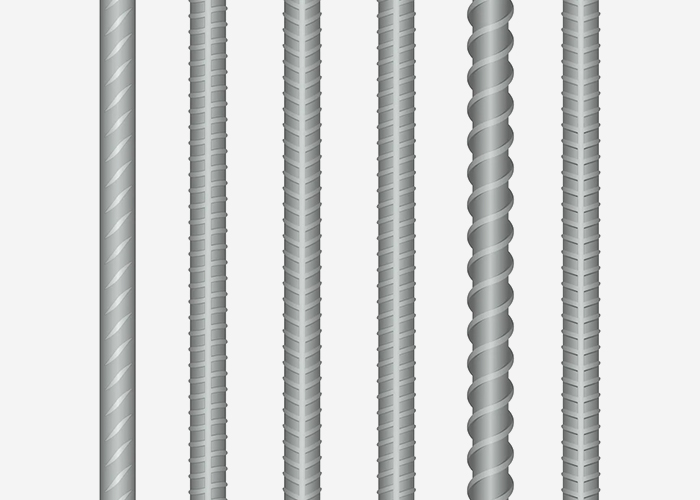
As has been mentioned already, the TMT bar was first introduced in 1979 and the grade used during that time was known as Fe 415. This was a widely used part of the construction work.
| Grade | Yield Strength | Applications |
|---|---|---|
| Fe 415 | 415 MPa | Suitable for small to medium-scale construction, residential buildings, and general RCC structures. |
| Fe 500 | 500 MPa | Widely used in commercial buildings, bridges, and high-rise structures requiring higher strength. |
| Fe 500D | 500 MPa (higher ductility) | Ideal for earthquake-prone areas due to improved flexibility and ductility. |
| Fe 550 | 550 MPa | Used in heavy-duty infrastructure projects, industrial structures, and large-scale construction. |
| Fe 600 | 600 MPa | Preferred for mega infrastructure projects requiring superior strength and load-bearing capacity. |
Also Read: Comprehensive Information on Different Grades of Steel
Key Benefits of TMT Bars in Construction
- High tensile strength that enhances the load-bearing capability of structures.
- Improved ductility that helps buildings withstand earthquakes and dynamic loads.
- Great corrosion resistance that provides longevity and durability.
- Better bonding with concrete that improves overall structural stability.
- Enhanced flexibility and bendability that allow intricate designs for structures.
- Consistent quality and uniform performance in RCC construction.
- Lower maintenance costs due to better rust resistance and durability.
- Applicable for residential, commercial and big scale infrastructure projects.
The Role of Sree Metaliks in Advancing TMT Bar Manufacturing
Sree Metaliks is helping the industry with the adoption of modern technologies, production with flexible processes, and quality control in TMT Bar manufacturing to gain a competitive advantage. As a trusted company we focus on our TMT Bar production because the industry needs construction due to the flexibility, durability, strength, and corrosion resistance of the bars. With the effective use of high quality raw materials, and after the use of advanced thermo-mechanical techniques, Sree Metaliks provides consistent performance, and long lasting reliability for the safety of diverse construction structures.
Also Read: How Do TMT Bars and Construction Go Hand in Hand?
Conclusion: Building a Stronger Future with TMT Bars
The full form of TMT bars is Thermo-Mechanically Treated bars, which are designed to offer superior strength and durability in modern construction. With advancements in the TMT bar manufacturing process, these bars provide enhanced performance compared to traditional steel reinforcement. The process involves controlled heating and rapid cooling, resulting in a tough outer layer and a ductile core.
Different TMT bar grades, such as Fe 415, Fe 500, and Fe 500D, are used based on structural requirements and load-bearing needs. These grades ensure optimal performance for residential, commercial, and infrastructure projects. The exceptional TMT bar strength improves flexibility, seismic resistance, and long-term structural stability.
By combining high strength, corrosion resistance, and reliability, TMT bars play a crucial role in shaping safer and more sustainable buildings. Their advanced technology and proven performance make them an essential component in building a stronger future for the construction industry.
For more information, please reach out to us at: Sales@sreemetaliks.com