
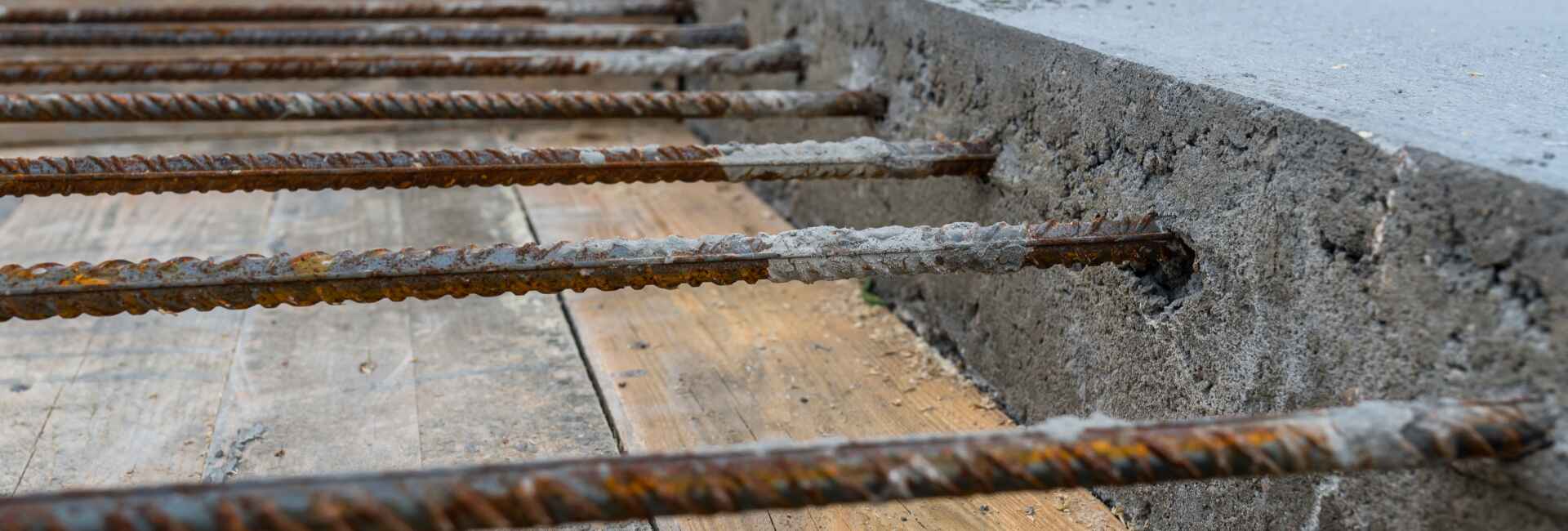
For reinforced concrete to be designed effectively, a clear understanding is required of the bond created between the reinforcing bars and the concrete. This bond is a primary determiner of the structural safety and durability of a concrete member. One of the most important factors in the design of this bond is the anchorage length.
Anchorage length determines how effectively concrete will be able to hold the reinforcement to the extent that the reinforcement will be able to resist some concrete tensile force without moving or slipping. Not only is it vital that RCC contractors and designers understand the concept of anchorage length, but it is also just as vital that it be understood because it is the primary factor that will determine how effective load transfer will be in a member.
Anchorage in reinforcement allows the member to fully utilise all the tensile strength of the reinforcing bars. This blog will talk about the concept and formula of anchorage length as well as its practical applications and design considerations to ensure optimal and safe construction.
What is Anchorage Length?
Anchorage length is the length of the reinforcement that has to be covered by the concrete to ensure that the bar can develop its full strength without slipping. It is a critical factor in the design of anchorage in reinforcement because it will determine how effectively the load will be transferred between the steel and concrete.
To put it simply, the anchorage length of reinforcement is the length that ensures the force acting on the steel bar is sufficiently transferred to the surrounding concrete by means of bond stress.
Importance of Anchorage Length in RCC
The anchorage length in RCC is a key factor in the structural performance of a building:
- It prevents the slippage of the reinforcement bars
- It ensures that an adequate load transfer takes place
- It helps to further improve the structural stability
- It helps to improve the overall durability of the reinforced concrete structures
- It helps to minimise crack and failure potential
For the reinforced concrete structures, the correct rebar anchorage length is essential.
Anchorage Length Formula
The equation for calculating the anchorage length is based on the concept of bond stress in relation to the diameter of the reinforcement bar.
Standard Formula: La = (ϕ × σs) / (4 × τbd)
Where:
- La= Anchorage length
- = Diameter of the bar
- s= Stress in steel
- bd= Design bond stress
This formula is how one arrives at the anchorage length calculation, and it determines the minimum length (anchorage length) that is deemed safe for the reinforcement.
Development Length vs Anchorage Length
Knowing the differences between development length vs anchorage length is essential:
|
Parameter |
Development Length |
Anchorage Length |
|---|---|---|
|
Definition |
Length required to develop full strength of bar |
Length required to anchor bar into concrete |
|
Purpose |
Prevents bar from pulling out under tension |
Ensures proper embedding and load transfer |
|
Application |
Used in tension zones |
Used at supports and endpoints |
Both are critical and interrelated for effective anchorage in reinforcement.
Anchorage Length in Beam
Anchorage length in the beam is especially critical at supports and nodes.
Important Points:
- Proper embedding at beam-column junctions
- To meet this length, hooks or bends may be introduced
- Each side must have enough cover
Poor anchorage length in the beam can cause a bond failure, leading to a failure of the structure.
Factors Considered for Anchorage Length Calculation
Calculating `anchorage length` involves the following:
- Reinforcement bar diameter
- Steel grade
- Strength of concrete
- Steel-concrete bonding
- Loading type (tension/compression)
Each of the above factors plays an important role in determining the `rebar anchorage length` needed to ensure safety for your design.
Design Tips for Anchorage Length
Standard Tips:
- Comply to design codes for minimum anchorage length.
- In restricted areas, use hooks or bends.
- Ensure adequate concrete cover.
- Do not crowd the reinforcement.
Customised Tips:
- Adhere to IS codes and other structural design guidelines.
- Perform a thorough `anchorage length calculation` before work commencement.
- Employ quality reinforcement.
Practical Uses of Anchorage in Reinforcement
`Improper anchorage in reinforcement` has been observed in the following areas:
- Beams and slabs
- Columns and footings
- Retaining walls
- Structural joints
Improper `anchorage length of reinforcement` will compromise structural integrity in the long run.
Frequent Mistakes on Anchorage Length
- Insufficient reinforcement length.
- Ignoring variations in bond stress.
- Placement errors in hooks and bends
- Concrete cover deficiency.
Correcting for these mistakes will guarantee an acceptable `anchorage length in RCC`.
Importance of TMT Bars in Anchorage
The reinforcement quality is critical for optimal rebar anchorage length. Because of superior quality TMT bars, the anchorage performance is enhanced because TMT Bars have better bonding with concrete.
Benefits of Good Quality TMT Bars:
- Better bonding.
- Increased durability.
- Superior load-bearing capacity.
- Better corrosion resistance.
A good TMT manufacturer provides consistency in quality, resulting in better structural quality.
Typical Anchorage Length Values (Indicative Table)
|
Bar Diameter (mm) |
Approx Anchorage Length (mm) |
|---|---|
|
8 mm |
320 – 400 |
|
10 mm |
400 – 500 |
|
12 mm |
480 – 600 |
|
16 mm |
640 – 800 |
|
20 mm |
800 – 1000 |
Note: These values are influenced by design conditions and properties of the materials used.
Advanced Anchorage Design Considerations
- Mechanical anchorage systems
- Seismic forces
- High-strength concrete anchorage
- Welded reinforcement
The above considerations are intended to provide a greater use of anchorage in reinforcement in complicated structures.
Read Also : Lap Length in Reinforcement Bars: Rules, Formula, and Site Practice
Conclusion
Ensuring minimum anchorage length is crucial for all reinforced concrete structures. Properly embedded reinforcements ensure effective load transmission and avoid structural failures. It is critical for safety to understand the anchorage length formula and the applied practical differences between development length and anchorage length for beams and other elements.
Comprehensive safety and structural integrity of a concrete structure is dependent on accurate anchorage length calculation and within defined margins development length. Along with the defined margins, optimum bonding and durability is to be expected with high grade concrete and the resulting flexibility is to be expected with a quality TMT manufacturer. Strength and safety of structures is highly dependent on meticulous work, and in the end, the best is expected from a construction professional and engineer.